Return to Home Page About Jiggers About  Ahadi Kenya Trust Activities Calendar of Events Photo Gallery About Cecilia Mwangi Contact Us Donation Form

ABOUT THE JIGGER

The Female
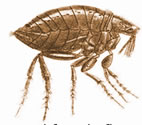
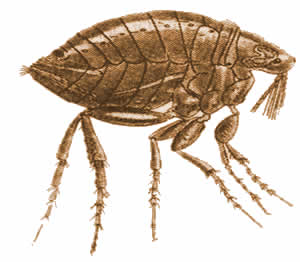
Tunga penetrans is known as the chigger, jigger, chigoe, bicho do pé or sand flea. The head is angular, it has no comb of spines, and the thoracic segments are narrow at the top.The female feeds by burrowing into the skin of its host. The abdomen becomes enormously enlarged between the second and third segments so that the flea forms a round sac with the shape and size of a pea.

The impregnated female Tunga embeds itself in the skin under the toenails and fingernails of man - where the resultant sores may fill with pus and become infected. Others victims can be dogs, cats, rats, pigs, cattle and sheep.

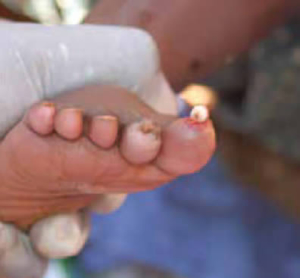
The first evidence of infestation by this sand flea is a tiny black dot on the skin at the point of penetration. Because the flea is a poor jumper, most lesions occur on the feet, often on the soles, the toe webs, and around or under the toenails. A small, inflammatory papule with a central black dot forms early. Within the next few weeks, the papule slowly enlarges into a white, pea-sized nodule with well-defined borders between 4-10mm in diameter. This lesion can range from asymptomatic to pruritic to extremely painful. Multiple/severe infestations may result in a cluster of nodules with a honeycomb appearance.

Click here to see a video clip of feet disfigured by jiggers

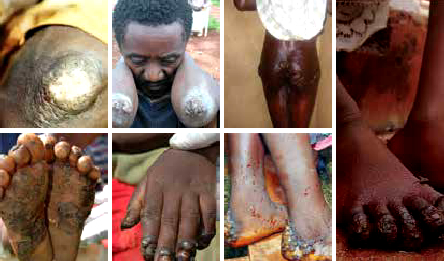
Heavy infestations may lead to severe inflammation, ulceration, and fibrosis. Lymphangitis, gangrene, sepsis, the loss of toenails, autoamputation of the digits, and death may also occur. In most cases, however, this lesion heals without further complications.

Nonetheless, the risk of secondary infection is high. Tetanus is a common secondary infection that has reported associations with death.

Jigger-infested knees

Click here to see a video clip of jigger-infested hands and legs

The sand flea is normally found in the sandy terrain of warm, dry climates. It prefers deserts, beaches, stables, stock farms, and the soil and dust close to farms.

While both male and female sand fleas intermittently feed on their warm-blooded hosts, it is the pregnant female flea that burrows into the skin of the host and causes the cutaneous lesion. She does not have any specialized burrowing organs; rather, she simply attaches to the skin by her anchoring mouth and claws violently into the epidermis. Since this process is painless, it is thought that the flea may release some keratolytic enzymes. After penetrating the stratum corneum, the flea burrows to the stratum granulosum, leaving her posterior end exposed. The "black dot" of the nodule is this posterior end of the flea sticking out. The opening provides the flea with air and an exit route for feces and eggs. With its head in the dermis, the flea begins to feed on the host's blood and enlarges up to 1cm in diameter. Over the next two weeks, over 100 eggs are released through the exposed opening and fall to the ground. The flea then dies and is slowly sloughed by the host's skin.

 
An adult female jigger that was surgically removed and measures 4.8mm. The head & thorax can be seen as the dark brown structure, off centred and to the lower left
 
A close up of the head of the female jigger

The eggs hatch on the ground in 3-4 days. In the next 3-4 weeks, they go through their larval and pupal stages and become adults. The complete life cycle of a Tunga penetrans lasts about a month.

Symptoms
An infestation begins to irritate and itch when is almost fully developed. Sometimes it causes severe inflammation and ulceration. If the female flea dies in the skin, it may cause a secondary infection which, if ignored, could lead to tetanus, gangrene and even loss of a toe. Natural extrusion of the eggs sac or removal of the jigger with a dirty pin or needle leaves a tiny pit in the skin which may develop into a sore. The sore may extend and develop into a septic ulcer. An infection under a toenail may cause pus to form.

Causes of the jigger infestation
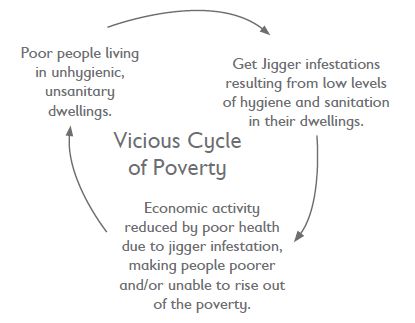
 The major cause, after this research was discovered to be poor hygiene conditions. 

Effects of the attack

  1. A clear effect of the attack is the inability to walk easily due to pain in the affected areas of the legs
  2. Inability to carry out normal day to day activities (work)
  3. Stigmatization by their neighbours
  4. Low self esteem resulting from the stigmatization
  5. Infections such as HIV/Aids are passed from person to person due to sharing of pins

The video clip can be viewed using Windows Media Player, Real One player or any other MPEG player Click here to see a video clip of a man rendered unable to walk by jiggers

The video clip can be viewed using Windows Media Player, Real One player or any other MPEG player Click here to see a video clip of a jigger-infested woman having difficulty in walking

The video clip can be viewed using Windows Media Player, Real One player or any other MPEG player Click here to see a video clip of a jigger-infested trying to remove a jigger using a pin

Treatment
The treatment consists of the extraction of the entire intact insect. The breaking of the jigger may cause inflammation and possible infection.  The best recommended treatment for this kind of attack would be to soak the feet in a solution of alcohol for instance hydrogen peroxide or the other commercial disinfectants like dettol, savlon etc.  A victim should soak their feet for about 15 minutes every day for about two weeks and this will completely kill the bugs.

For a complete eradication of the bug, their homes should be thoroughly fumigated and any animals that also have the fleas treated. To ensure that the home is bug free, the victim and the rest of the family have to be educated on the need to observe hygiene and ensure that the bugs do not find a home in their homes again.

Preventive measures
The prime preventive measure of the jigger is observing cleanliness. Wearing of shoes should also be encouraged to ensure that the flea does not find entry into ones feet. In infested areas, people should check their feet daily for freshly burrowing jiggers, which are visible as minute black spots and cause an itchy sensation. The fleas may also be deterred by a repellant applied to the skin, although walking barefoot in dirt quickly removes it. If it is possible to locate the area of soil where jiggers originate, it could be burnt off or sprayed with a suitable insecticide in an effort to kill the fleas.

Link with HIV/AIDS
Another noted problem that may be caused by jigger infestation is the risk of passing on blood transmitted infections such as HIV / AIDS by use of unsterilised equipment to remove the bugs from different people. It was noted that many people share a single pin to extract jiggers - this is a situation that exposes individuals to the infection of HIV from those who already have the virus.


^ Return to top I Return to home page

News Updates:
10th June 2009: Anti-jigger awareness campaign/lottery launched in Nairobi. ...... 15th May 2009: Prime Minister’s wife Ida Odinga joins anti-jigger campaign in Kandara.......... 1st May 2009: Anti-jigger campaign launched in Narok........22nd April 2009: Ahadi Kenya announced Winners of third annual Leadership & Management Award in Global Health..........4th April 2009: More than 700 people recover fully from jigger infestation......21st March 2009: Anti-jigger campaign launched in Eastern Province.......20th March 2009: A family of Five (5) are admitted at Kiambu District Hospital after jigger attack........7th March 2009: More than Four (400) children were treated of jiggers in Kandara........14th February 2009: Several people were treated of jiggers and supplied with foodstuffs on Valentines Day.......22nd January 2009: More than twenty (20) jigger victims from Kandara Constituency are admitted at Maragwa District hospital. ...... 10th January 2009: Over 10 million Kenyans at the risk of jigger infestation says Hon. Beth Mugo, Minister Public Health.......6th December 2008: 300 children at Lewa downs primary school in Samburu  are infested with jiggers...........15th November 2008: Bee-keeping project launched for recovered jigger victims in Murang’a....11th October 2008: Over 40,000 school going children are jigger infested in Malindi.....10th October 2008: Anti-jigger campaign is launched at the coast province....... ...4th October 2008: A jigger help Centre is opened in Gatundu.........17th September 2008: NIC Bank donates Ksh.100, 000 towards the anti-jigger campaign.............13th September 2008: Kenya Airways launches clean up campaigns for jigger infested primary schools... . ....2nd September 2008: Nigerian twin artists P-Square visited and committed their support for the Anti-jigger campaign... More information in the ACTIVITIES section..