ACTIVITIES continued...
| |||||||||||||||||||||||||||||||||||||||||||||||||||||||||||||||||||||||||||||||||||||||||||||||||||||||||||
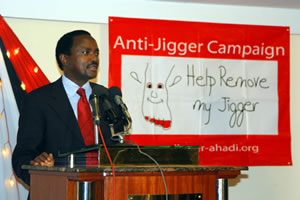
29th March 2008-(One-year celebrations )
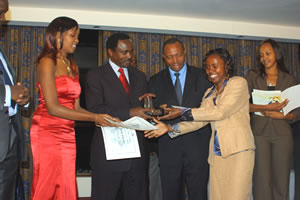
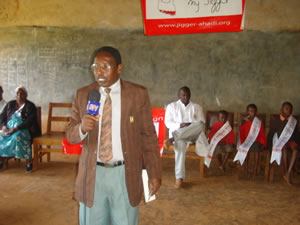
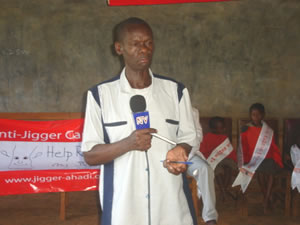
28th March 2008-(Media Awards Cocktail)
24th
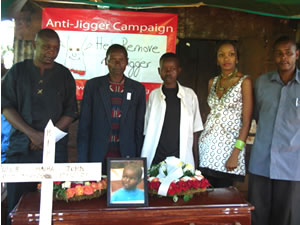
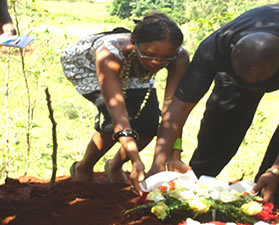
Dec 2007 -Burial
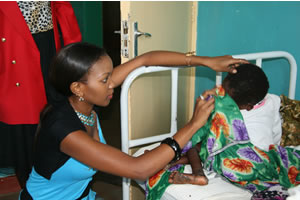
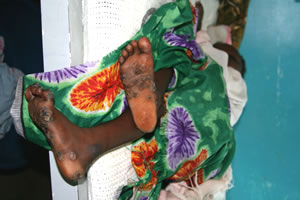
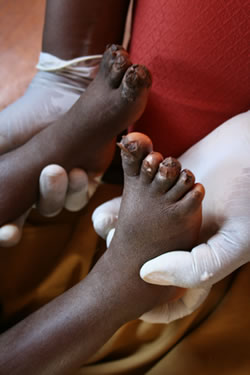
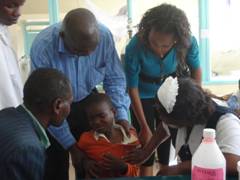
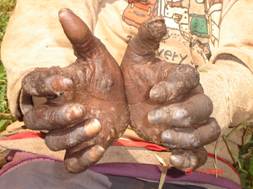
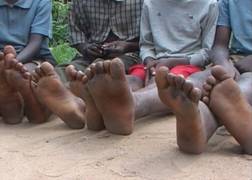
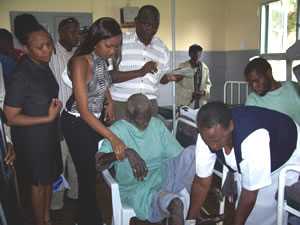
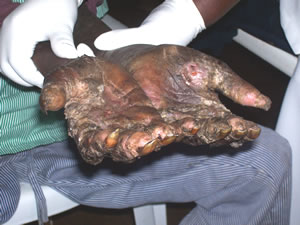
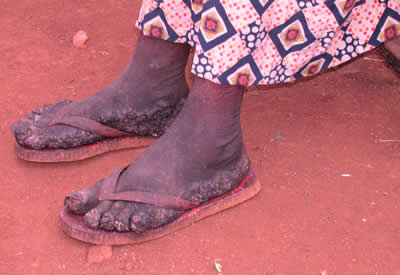
Maragwa Visit -10th Dec 2007 A family of Five(5) are admitted at Maragwa District hospital following severe jigger infestation. Ahadi Kenya team visited the victims at the hospital to check on their conditions. The children aged between three(3) months and Four (4) years have both their feet and hands badly affected. The Hospital superintendent confirmed that the children condition are improving and will be discharged in two weeks. Ahadi committed to visit them in their home once discharged for support. Donation for both clothes and food were made to the victims.
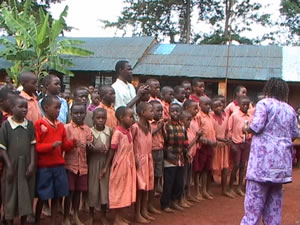
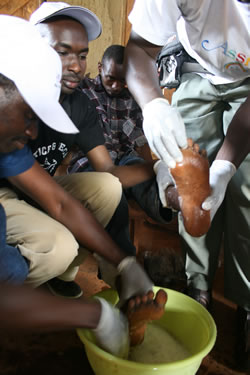
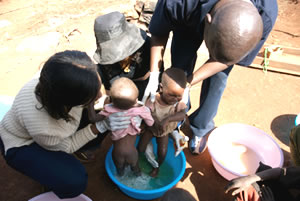
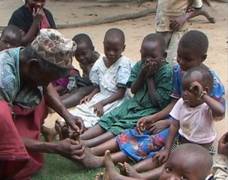
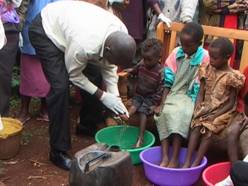
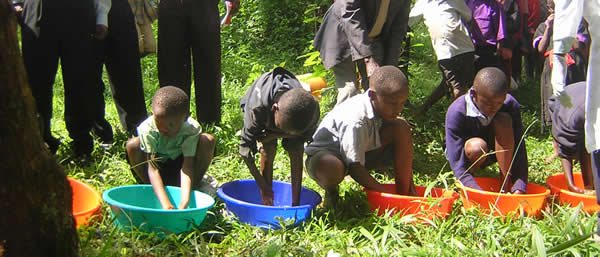
10th Nov 2007- (Clean up exercises). More than fourty (40) students from Tangaza College joined Ahadi Kenya team in a clean up exercise at Gitugi Primary School. The school has more than 90 pupils infected with jiggers. The pupil had both their hands and feet washed with disinfectants. They were advised on how to keep themselves clean to avoid further jigger attack. The Tangaza group also donated Shoes, Soap and Foodstuffs to the pupils.
Makuyu Visit 20th October 2007 Eight children from one family in Makuyu are jigger infested on both hands and feet.
Global Campaign Against Poverty 17th October 2007 (GCAP)
Rescue -23rd Sept 2007.
Donations-19th Sept 2007
Schools visits-6th-15th Sept 2007. Siaya Report-12th Sept 2007
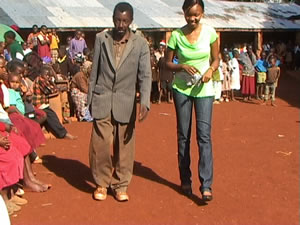
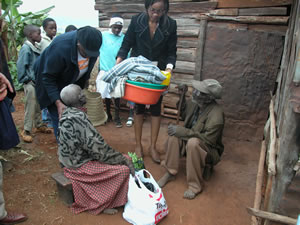
Kwale Visit-30th August 2007 In Burani village of Kwale district Mzee juma kai assembles school going children in his compound to remove them jiggers. More than 40 children were found queying and waiting to be attended. This we were told happens every term before schools reopen. A high risk of transmitting diseases like HIV aids was evident as the man uses sharp metal bar in all the children. Children seemed to be in a lot of pain.
Kandara Visit -11th September 2007
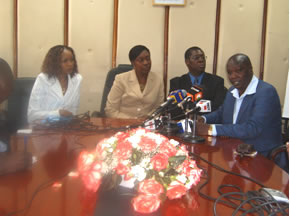
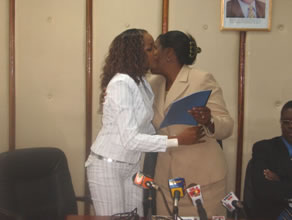
Visit to the Ministry of Health - 22nd August, 2007 The jigger problem being a health issue, though looked at differently, called for the seeking of partnership with the Ministry of health. Cecilia paid a courteousy call to the ministry of health, Hon. Charity Ngilu at her offices in Afya House and was able to get the ministry's support in the project. She presented the minister with a detailed report of the work the campaign has been able to do since its inception in February, 2007. Cecilia highlighted the salient parts of the report, namely, the effects of the jigger, the prevalence of HIV/AIDS brought about by sharing of needles, stigmatization and isolation of people infected, hospitalization and even death of some of the victims. Cecilia also presented the minister with a proposal that her ministry will use in mapping out the areas affected by the jigger countrywide. The minister was impressed by the initiative and has authorized the campaign to carry out its project in any part of the country that has jigger victims. She promised that her Ministry and the Ministry of Education would partner with the campaign and she would also ask other MPs to support the project. She reiterated that any causalities of the jigger should be taken to the nearest health centre.
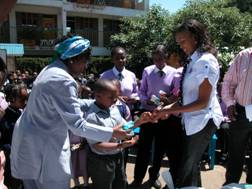
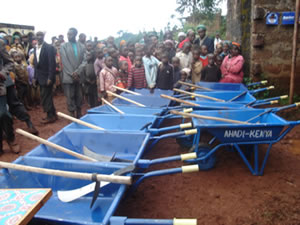
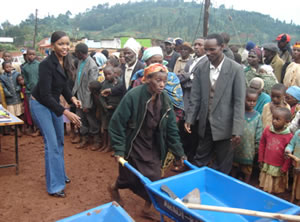
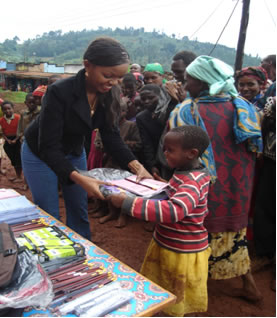
Performance Review against set Objectives & Award presentations - 11th August, 2007 This day marked five months since the project was started. It doubled up as a day to evaluate the performance so far and reward those who had been exemplary in the healing process. The adults were rewarded with farm tools, specifically wheelbarrows, jembes and pangas. At least twenty adults were rewarded and this marks the beginning of a productive and active livelihood for them. They have been enabled to go back to their farms and work and fight the poverty that brings about issues like the jigger. The farm tools were donated by Johnson & Johnson Ltd. Who have continually supported this campaign and most especially with one of their products, Savlon which is the disinfectant recommended for treatment for jigger infested feet. At least 110 school pupils were rewarded with beautiful bags, exercise books, pens, pencils, rulers and rubbers. It was a remarkable sight, seeing the little boys and girls running to come and receive their gifts after having completely gotten rid of the jiggers that were previously in their feet. The objectives set from the onset had been achieved checking against the performance so far. This gives a go ahead to move to the next level in this project.
Kericho Visit- 25th july 2007 (Three hospitalised with serious infeststion) A story in one of the local dailies exposed a family of three who have been extensively infected by jiggers. The ahadi team visited the District hospital where a family of three is hospitalized due to a serious jigger infestation. The family of three, namely Michael Gogo (father), Jane Gogo (mother), and Geoffrey Melly (son) were undergoing treatment at the hospital. Cecilia's appeal was for society to integrate jigger-infested people into the society and help them especially the kids and aged. She also appealed to the Government to waive all charges for the infected so they can access medical services noting that most of them were poor. The visit was conducted by the deputy medical superintendent Dr. Geoffrey Otumo and the Nursing Officer in Charge Mrs. Jane Maru. Dr. Otumo appealed to all people infested with jiggers to come out of denial and access medical services. He said the patients were recovering well and would be discharged soon.
Cecilia noted that the anti-jigger team would visit the homes of the victims to fumigate and clean. She noted it was pointless to treat them if they were going to the same environment since there was very close link between jigger infestation and poor hygiene. Gikambura Visit- 14th july 2007 Gikambura is a village in Kikuyu Township. The jigger has not spared the people in this village. The first encounter is Amos Gitau, a young man who is about 30 years old. Amos' feet have been extensively attacked by the jigger and it is apparent that he needs urgent and very exhaustive treatment. He lives with his mother and brother who have not been affected. They are concerned about his situation and his brother is keen on seeing that the jigger attack is turned around. He promises to monitor his treatment. The next is a couple, Hannah Wambui and Kamau Njuguna. They have both been affected and their old age has not made it better since they have been rendered helpless. They are not able to extract the jiggers out of their feet and they have therefore been able to multiply in their feet to a great extent.
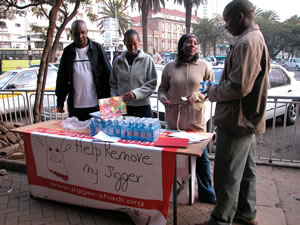
Fumigation 11th-18th july (Muranga) (62 homes fumigated) Ahadi Kenya team and volunteers visited more than 60 homes where food clothing and shoes were distributed. The homes were also fumigated killing fleas that cause jiggers. This process is continuous until everyone gets to normal and active life. During the visits the Ahadi team appealed to the neighbours of those infested to accommodate and not isolate them from the community. Awareness/Fund-raising- 6TH- 20TH JULY 2007 Six (6) information centres were set-up on the major streets of Nairobi city namely: Kenyatta ave., Mama Ngina st. , Kimathi st., Agha Khan walk, Moi ave. and Tom Mboya st. The main objective of the centres was to create awareness on the jigger infestation in the country and get public views on this issue.
The centres also doubled as water selling points to raise funds for the campaign. This water was donated by a well wisher to enable us buy shoes and conduct trainings on hygiene and sanitation. City council of Nairobi donated the spaces as part of their support. Juja Visit- 4th july 2007 (Two confirmed dead) It was in Milimani area of Juja that the Ahadi team visited. The area village elder, David Kariuki alerted the team when two people who had been infested by the jigger died. One of the victims they were able to find and help is Nyokabi Karuiru who was bed-ridden and in her mid 30s. A follow-up visit shall be made to find out what progress she is making.
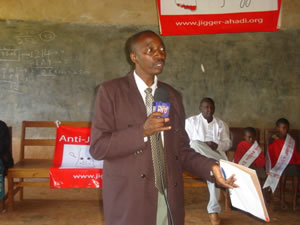
Workshop - 30th June, 2007 The workshop was a getting together of stakeholders of the Anti-jigger campaign. This included the Ministry of Health, the School fraternity, the Church Community and the Administration. The event was at Gitugi Primary school - a school in Gitugi location where 87 of the 740 pupils have been acutely infested by the jigger. Mr. Joakim Kuria the school headmaster reiterated that the jigger problem has largely affected the smooth learning process of these pupils and is positive about being involved in the jigger eradication programme. An important issue was raised - the lack of a feeding programme in schools bearing in mind that most of these jigger infested pupils are from poor families and are hardly well nourished. This is an imperative pointer in the whole rehabilitation of any child who is infested and need to be looked into.
The Ministry of Health which has already embraced the programme and made it its initiative to dig deeper into the underlying problems of the jigger pandemic is enthusiastic about the bringing together of heads in getting rid of this pest. The Ministry's representatives recapped the importance of addressing the jigger issue from the grassroot that it was as important to touch the child in school as it was to go back to their homes and eradicate the problem from its source. This calls for the involvement of parents and especially mothers who are the caregivers in most homes. They need to be enlightened on hygiene issues, that a child needs to be given a bath every so often and have their clothes and homes cleaned to be able to combat this pest entirely. The other stakeholders specifically the church and the administration unit shall also come on board and in their points of strength help in this challenging but possible fight against the jigger.
All parties agreed to work together to the point where the jigger was a thing of the past in this area.
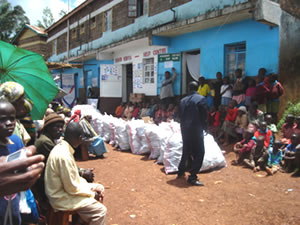
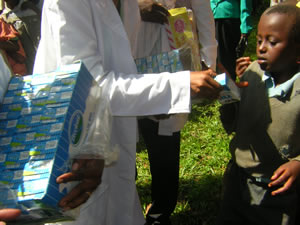
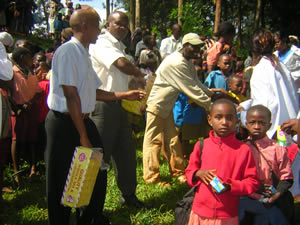
Centre Restocking and Donations to school going children - 5th June, 2007 Following the very welcome and overwhelming response the campaign is receiving, the visit that was scheduled for the 5th of June, 2007 was even better since it doubled up as a trip to take the donations that have been received from well wishers. The donations included milk from the Kenya Dairy Board, shoes from Print Xpress Ltd, Savlon the disinfectant that is used in the treatment of infested feet by Johnson & Johnson Ltd. and foodstuff from friends.
The donations were flagged off at Uhuru Park by Amina Abdalla, a nominated member of parliament. Ms. Amina commended this initiative and congratulated Cecilia Mwangi the campaign ambassador for taking the initiative to push it forward since it is problem that has been forgotten. She reiterated that thinking of development goals and deadlines before eradicating pests like the jigger does not make much sense. The flagging off was followed by a presentation of the donations in Karunge village, Muranga. This coincided with a field day by the Ministry of Health. Ahadi Kenya and the Ministry agreed to partner in the fight against jiggers. The District Public Health Officer (DPHO), Mr. Nyaga said he was happy with what Ahadi was doing and they would give them all the support they could.
< PREVIOUS ACTIVITIES I MORE ACTIVITIES>
|
|||||||||||||||||||||||||||||||||||||||||||||||||||||||||||||||||||||||||||||||||||||||||||||||||||||||||||